EN
/ MN

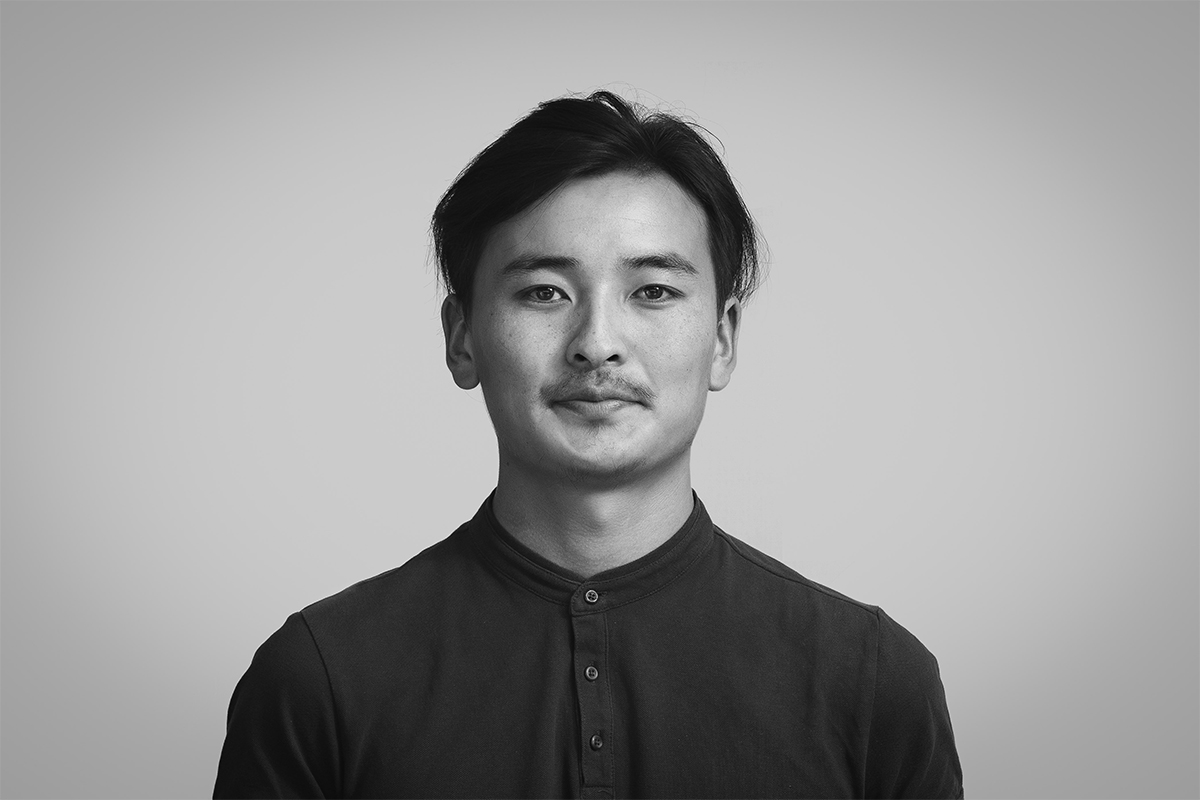
My name is Enkhtamir. In 2021, I graduated from a joint Architecture program between Kyoto Institute of Technology in Japan and the Mongolian University of Science and Technology (MUST). I am now in my second year of working professionally in my field.
I enrolled at MUST in 2016 and went to study in Japan in 2019. While in Mongolia, I gained a solid understanding of building volumes, structural systems, and basic engineering concepts. I chose to study at Kyoto Institute of Technology because I wanted to improve my architectural skills from an artistic perspective and develop a stronger sense of design. My background at MUST, which focuses on design and arts, gave me experience in hand drawing and expressing ideas visually, giving me an advantage over other students in Japan. However, in architecture, the idea itself is what matters most there are no strict rules about medium or technique; you can express your ideas even with a simple colored pencil.
One unique aspect of Japanese architecture schools is that the curriculum is influenced by the history of the city where the school is located. Kyoto Institute of Technology is in Kyoto, a historic city where Japanese emperors lived for many years. Like Ulaanbaatar, Kyoto is surrounded by mountains, but no buildings exceed five stories. From almost anywhere in the city, you can see the surrounding mountains and trees, which defines the city’s character. Since land is limited, urban planning focuses on questions such as whether to demolish existing buildings or restore them, how to preserve the value of small areas, and how to create spaces that are genuinely useful for people.
The best architects from Kyoto and nearby cities teach at the university. Most instructors are young architects actively working in their careers rather than retired experts, which allows students to gain practical knowledge and creative freedom. Another important feature is that teachers never tell students their work is “right” or “wrong.” Mistakes are allowed; the guidance is always about how to move in the right direction. I consider this approach invaluable for both personal and professional growth.
The program structure in Japan was as follows: I joined in the third year, studied one year with the whole class, and then, in the fourth year, we were divided into six laboratories: structural engineering, building services, spatial planning, concept design, historical research, and restoration. I chose the Spatial Planning Laboratory. Spatial planning focuses on studying small parts of the city rather than designing entire buildings for example, researching how to transform a historically valuable but deteriorated bridge or urban block into a useful space for people. The class had about 130 students, and roughly 20 instructors divided us into groups of 6-7. Projects were conducted collaboratively, with presentations at the end to highlight the best ideas. Senior students would also attend classes, give feedback, and everyone learned from each other. As a fourth-year student, I even collaborated with third-year students, discussing architecture and sharing ideas.
Before this, I thought architects were mainly guided by innate talent and sensitivity. However, studying in Japan showed me that architecture requires a foundation: planning, research, and systematic thinking are just as important as creative intuition.
One challenge was the intensive program schedule it was difficult to focus fully as I would have as a regular student. At first, it almost felt like going to Japan was more important than becoming an architect. Still, I quickly adapted, and while I initially struggled with professional terminology, I was able to understand the courses well and had the resources and environment needed to learn effectively.
After graduating in 2021, I joined MGL E&C Design Company. I have two years of experience studying in Mongolia, two years in Japan, and now two years of professional experience. I was drawn to the company because of the freedom in design and conceptual work. Initially, while working on interior concepts, I questioned whether my designs were structurally sound or accurate. Later, working on construction drawings allowed me to understand the structural details and meaning behind each element. That experience reinforced the importance of learning the fundamentals and gave me the confidence to join the technical drawing team. Construction drawings require communication with multiple engineers, and at first, it was challenging because I hadn’t worked with so many people before. Over time, I have gained a deeper understanding of my work and continue to improve.